
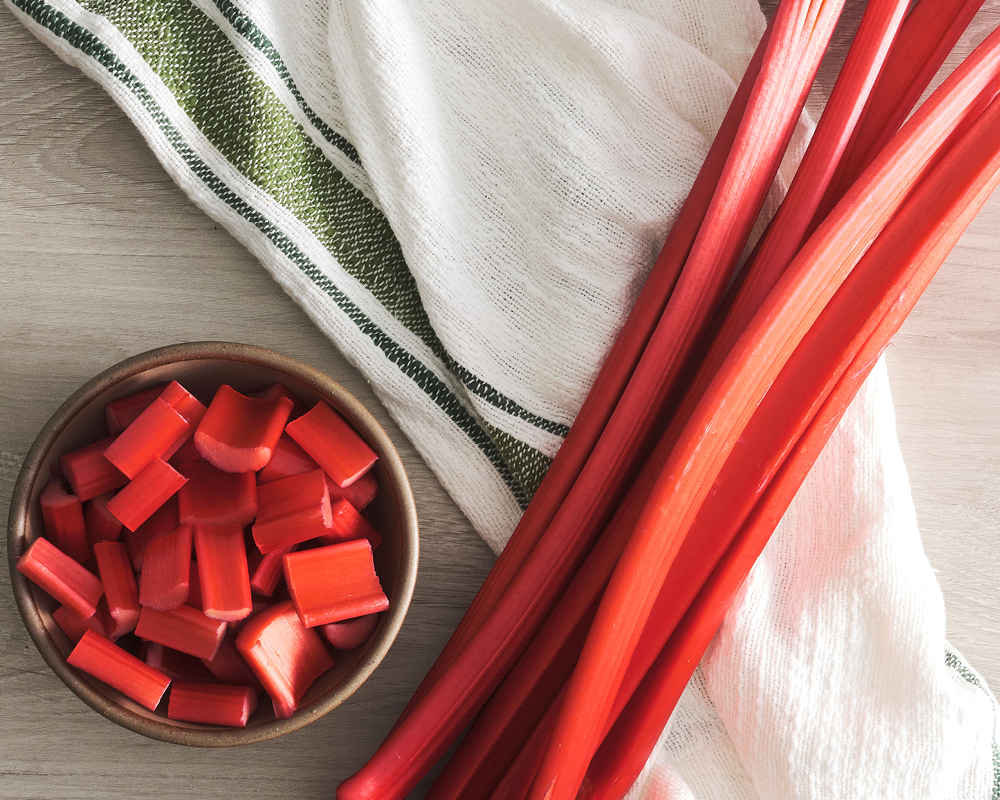
Spring in the PNW means bees buzzing, cherry blossoms drifting through the air, and ruby-pink rhubarb popping up in droves. With its shockingly vibrant hue, rhubarb looks like something straight out of the whimsical world of Alice in Wonderland. You may know it best as strawberry’s sidekick in fresh-baked pie, but there’s so much more to this fabulously fuchsia fruit (or should we really say vegetable?). Let’s fall down the rabbit hole and break down the basics of the tart springtime favorite.
Is rhubarb a fruit or a vegetable?
With the utmost confidence, we can say that rhubarb is (drumroll, please)…a vegetable!
Though the waters are admittedly a bit murky. Botanically speaking, rhubarb is a vegetable in the buckwheat family, but it’s often treated like a fruit in desserts. In fact, in 1947 a New York customs judge declared it a fruit for tax and tariff purposes.
Whether you’re team fruit or veggie, rhubarb offers some of the produce world’s greatest nutritional benefits. The edible stalks are full of fiber, vitamins C and K, and antioxidants—which give rhubarb its rich red color.
When is rhubarb in season?
Rhubarb is one of the earliest outdoor spring crops to appear in Washington thanks to its ability to thrive in cold weather. Peak season runs from April to June, but you may find the rosy stalks in local markets all the way into November.
What does rhubarb taste like?
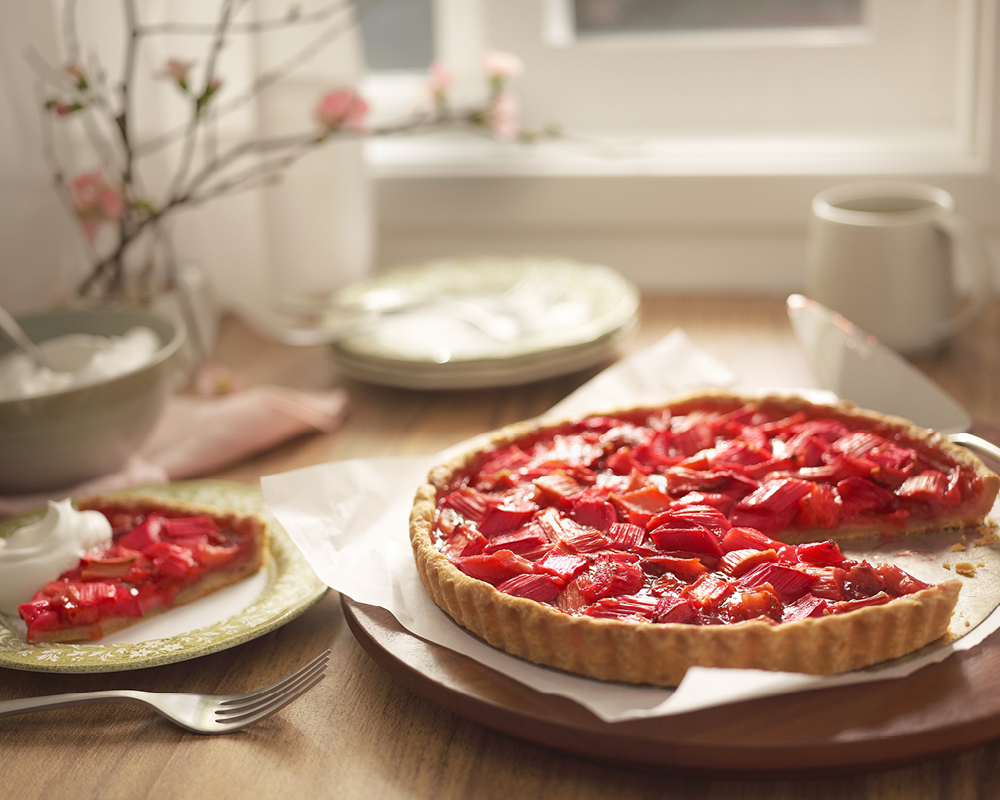
Rhubarb has a sour, earthy punch, which is why it’s rarely eaten raw. Most often, rhubarb is paired with fruit or sugar to balance its intensely tart flavor. When dressed up with sweeter notes, rhubarb shines in baked goods—famously earning it the nickname “the pie plant.”
If you’re looking to bring home rhubarb with a naturally mellower flavor, reach for thinner, firm stalks. They often taste a bit milder than thicker, softer ones.
What ingredients pair well with rhubarb?
In general, anything that tempers rhubarb’s sourness will do the job—think sweet, creamy, rich, and aromatic ingredients.
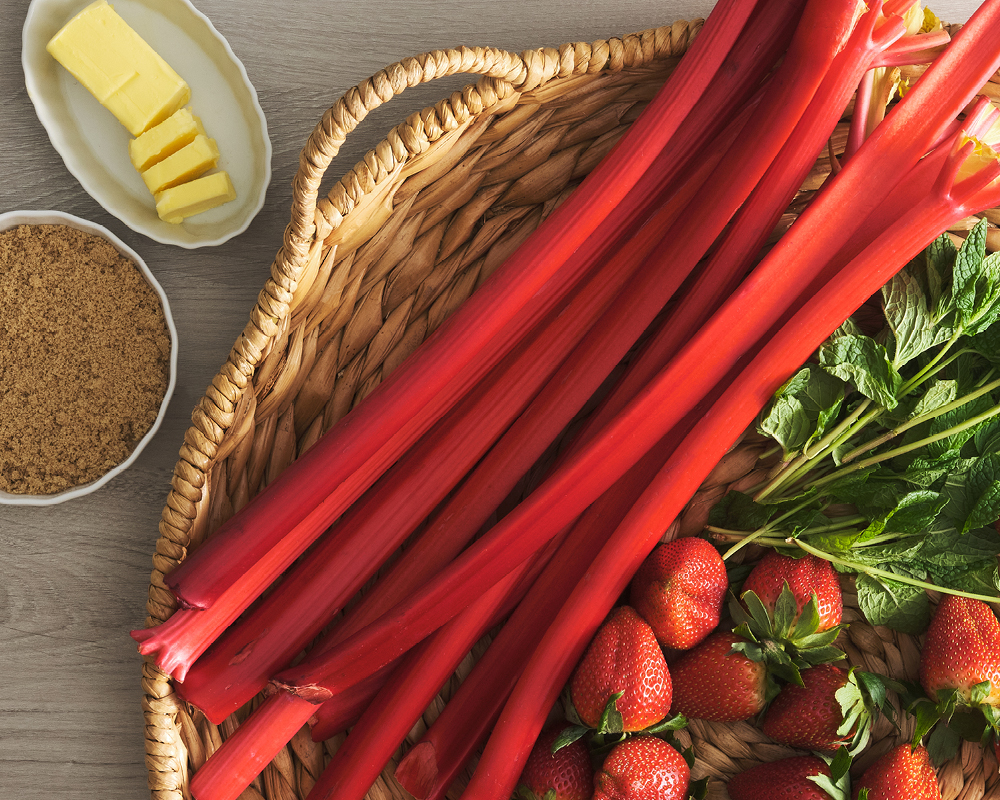
Strawberry and rhubarb are a classic culinary combination thanks to their perfect balance of sweet and sour—apples work beautifully too. Sugar and butter are excellent additions for baked goods, but you can also try honey, maple syrup, or monkfruit as alternative sweeteners.
Herbaceous options that offset rhubarb’s tang include mint and ginger. A pinch of citrus zest or a splash of orange juice can also soften rhubarb’s sharp edge while highlighting its natural brightness.
Personally, I like to get creative with a mix of ingredients. My best rhubarb-ian advice? Taste as you go along, adjust as needed, and trust your palate to guide you.
How do I prepare rhubarb?
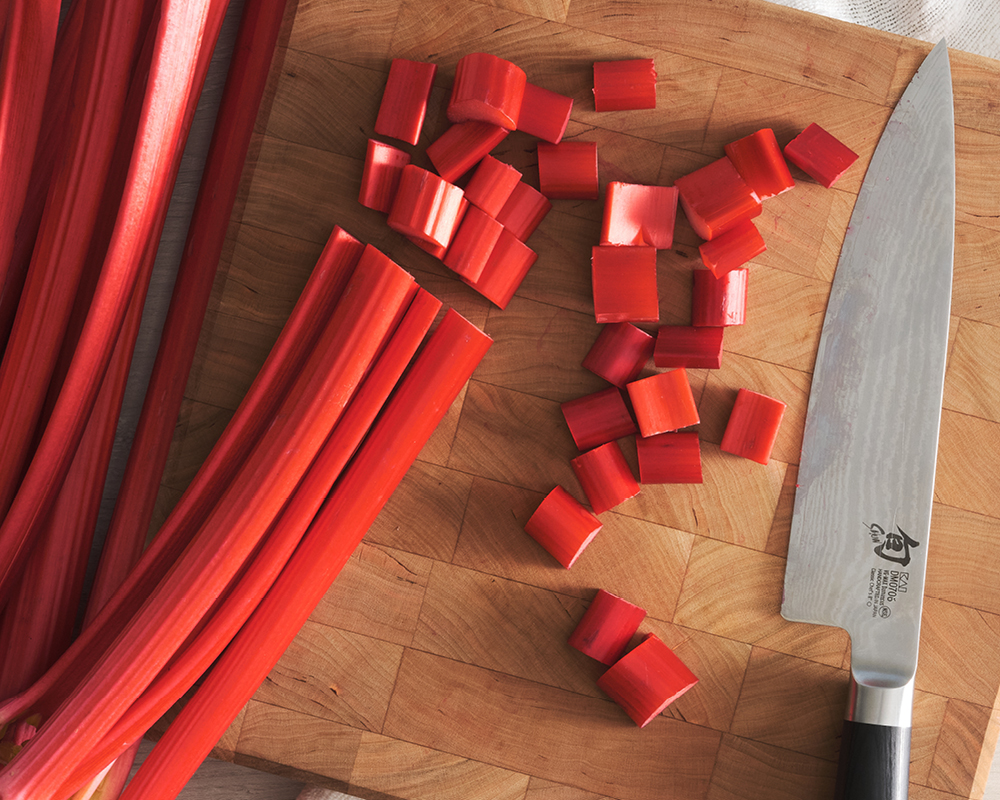
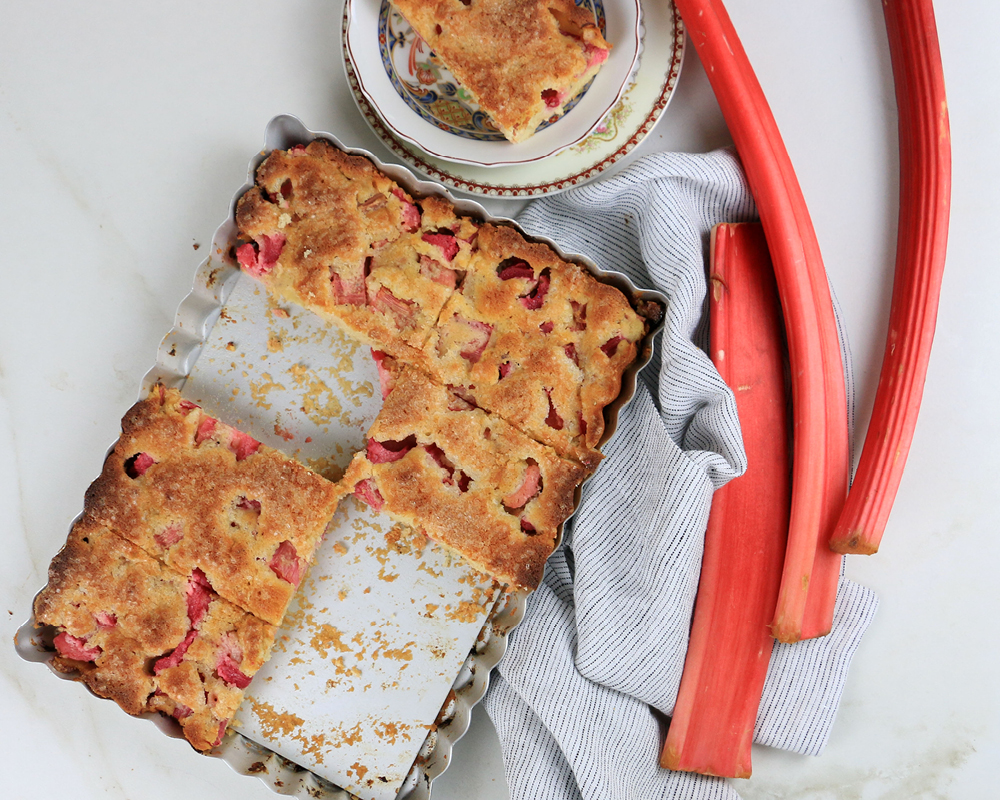
First and foremost, remove all leaves—they contain high levels of toxic oxalic acid, but the stalks are perfectly safe to eat. Wash and dry the stalks, then trim off the tough ends. Remove any blemishes with a peeler or paring knife, but leave most of the stalk unpeeled to retain its beautiful color and best flavor. Thicker stalks can be sliced lengthwise to create evenly sized pieces for chopping.
What dishes can I cook or bake with rhubarb?
Pies and tarts are the classic way to showcase rhubarb’s flavor, but it’s far more versatile than you might expect.
Rhubarb pairs exceptionally well with rich meats like pork, lamb, and fish. Stewing or braising the bright stalks in savory dishes creates a unique and colorful spring entrée. And rhubarb melts beautifully when simmered, transforming into a syrupy, jammy base perfect for sauces, compotes, and glazes. I recently baked salmon fillets with a generous slather of tangy rhubarb-ginger sauce, and it was a huge hit with my notoriously picky fiancé.
You don’t even have to apply heat to enjoy rhubarb to the fullest. Try pickling the stalks with sugar and vinegar for a puckery element in salads, or macerate them with your choice of acid and sweetener for a multitasking topping that pops on the plate.
Here are some of our favorite rhubarb recipes to make the most of rhubarb season:
How should I store rhubarb?
Keep unwashed stalks in an unsealed plastic bag in the crisper drawer for up to a week. To prolong its stay in the fridge, wrap the stalks tightly in foil to keep them fresh for up to three weeks.
Rhubarb also freezes well. Chop the stalks and lay them on a baking sheet in the freezer for 30 minutes, then transfer to a freezer-safe container. This prevents the pieces from freezing together into one stubborn clump.
The stalk of the town
Rhubarb’s vibrant color and zingy flavor capture the spring season perfectly—fresh, lively, and just a little unexpected.
Stop by your local Metropolitan Market while the stalks are at their peak. Brighter days (and brighter flavors) are finally here!