
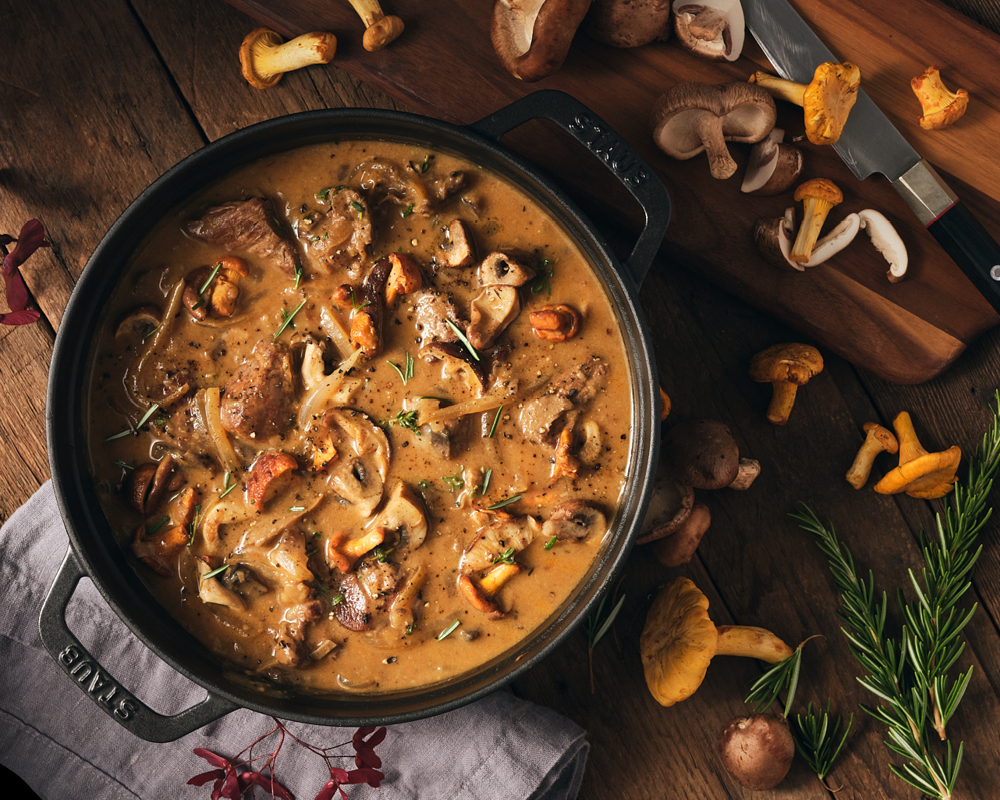
Mushrooms go hand in hand with fall cooking. Their earthy, savory flavor brings depth to cozy braises, creamy pastas, hearty soups, and sautéed sides. Plus, they look stunning and add a touch of whimsy to any plate.
Our region is home to several sought-after varieties, picked during the wild mushroom burst that occurs every autumn. Here are some seasonal mushrooms to make your fall dishes extra delicious.
To discover our year-round varieties and helpful cooking tips, visit our Mushrooms 101 blog.
But First, Recipe Ideas
This time of year is perfect for settling down into a slower rhythm and experimenting with comforting recipes in the kitchen. These three dishes feature a medley of mushrooms that capture fall’s grounded, bountiful essence. Pick whichever varieties you like to create a dish that’s all your own.
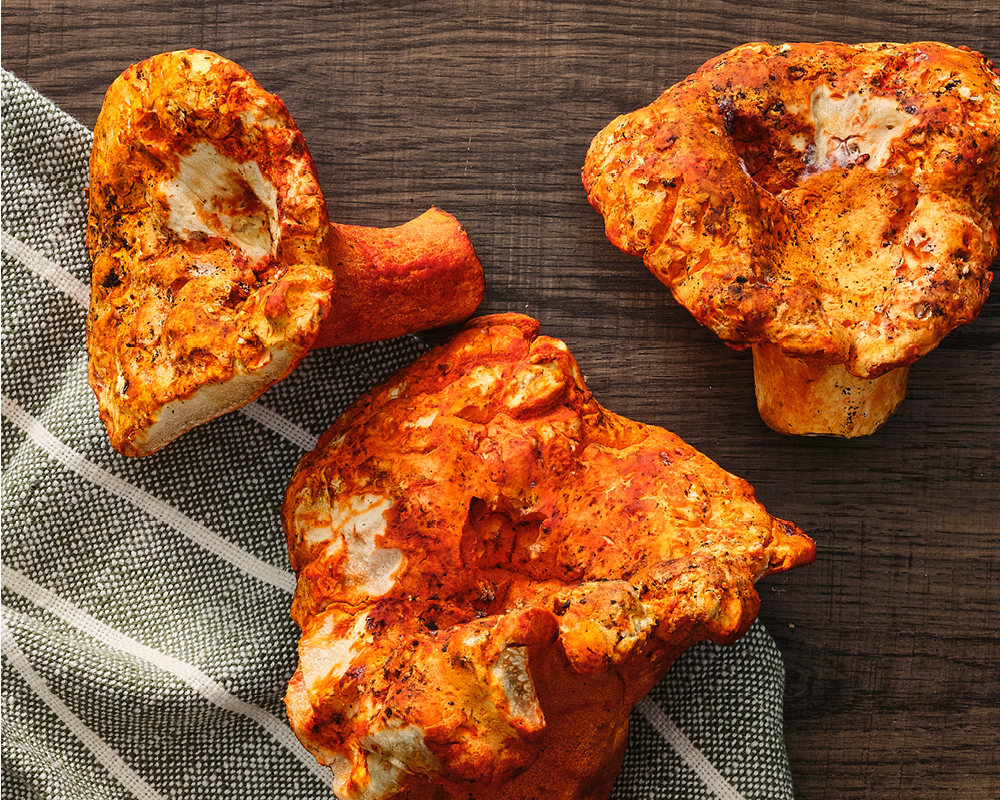
Lobster Mushrooms
Appearance: Vivid orange to reddish-orange exterior with dense, irregularly shaped flesh
Taste and texture: Firm, substantial texture with a mild, nutty flavor and subtle seafood-like aroma
Best uses: Sautéing, roasting, chowders, pasta, risotto
Their dense texture holds up beautifully to cooking. Slice into thick pieces and sauté in butter or use anywhere you want a mushroom with a little extra bite.
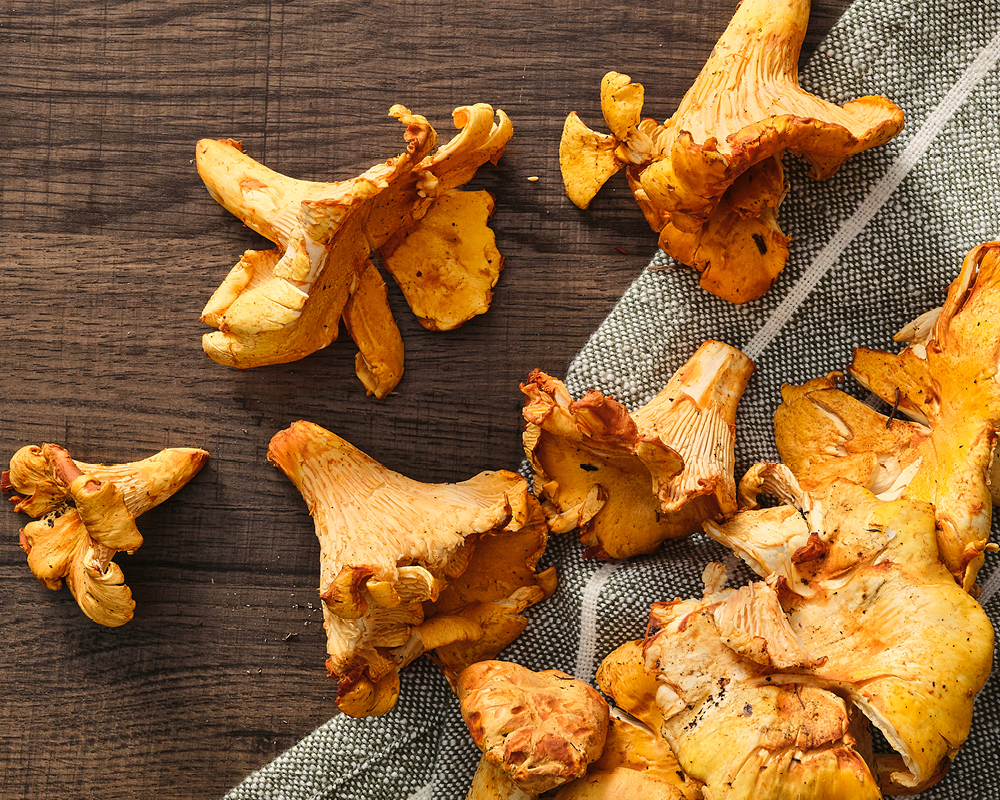
Chanterelles
Appearance: Golden yellow to orange with elegant, trumpet-shaped caps and wavy edges
Taste and texture: Delicate yet meaty texture with a mild, earthy flavor and distinctive fruity, apricot-like aroma
Best uses: Sautéing, pasta, risotto, omelets, cream sauces
One of the Pacific Northwest’s most celebrated wild mushrooms. Keep preparations relatively simple—chanterelles shine with butter, cream, herbs, eggs, and other ingredients that let their delicate flavor come through.
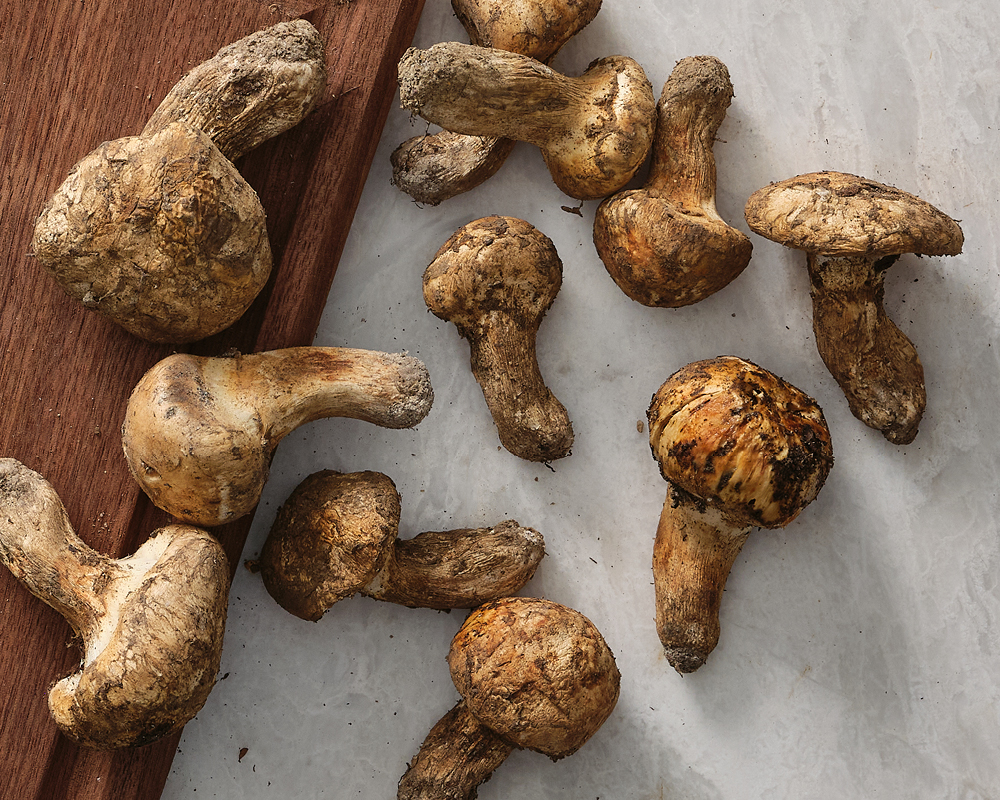
Matsutake
Appearance: Stout, firm mushrooms with white to brownish caps, thick stems, and often a veil or ring around the stem
Taste and texture: Firm, almost crunchy texture with an intensely aromatic, spicy, woodsy scent
Best uses: Soups, rice dishes, grilling, steaming
Highly prized for their unmistakable fragrance, so avoid burying them beneath heavy sauces. Simple preparations showcase their aroma and distinctive texture.
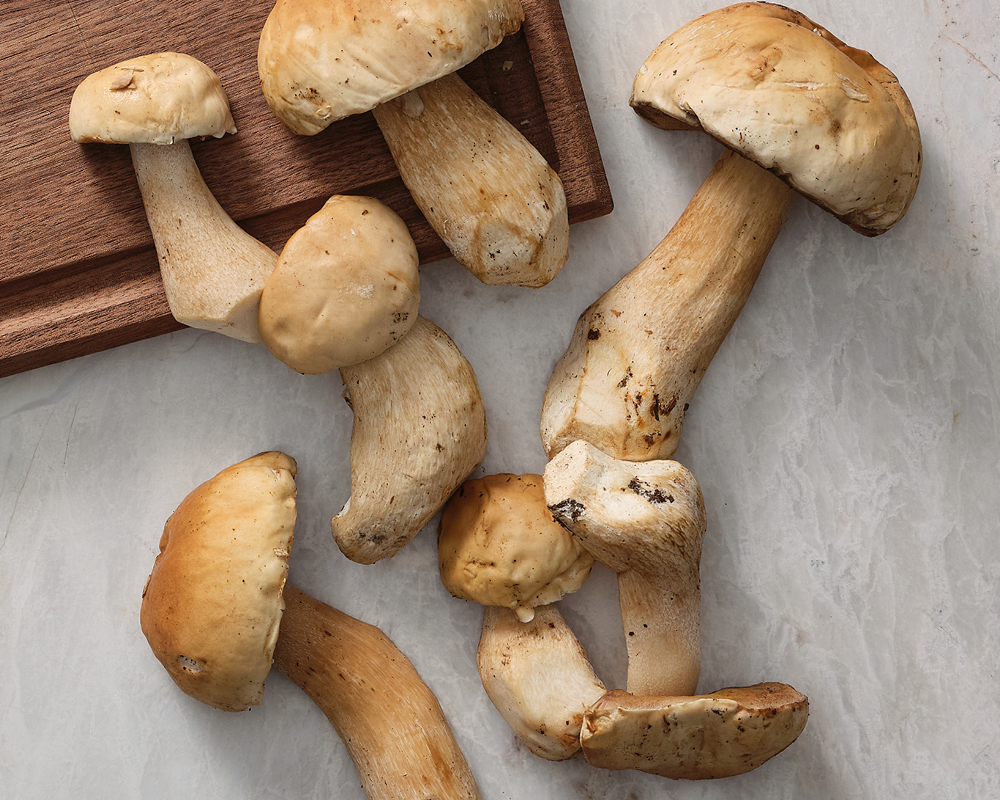
Porcini
Appearance: Plump, sturdy mushrooms with thick, pale stems and rounded tan to reddish-brown caps
Taste and texture: Dense and meaty with a rich, nutty, deeply savory flavor
Best uses: Sautéing, roasting, pasta, risotto, soups
Also known as boletes or ceps, porcini bring concentrated woodland flavor to a dish. Fresh porcini can be simply sliced and sautéed in butter or olive oil to let their flavor take center stage. You can find the dried version year-round in the produce department.
Chicken of the Woods
Appearance: Striking yellow to orange shelf-like clusters that grow in overlapping layers
Taste and texture: Dense, tender texture often compared to chicken with a mild, savory flavor
Best uses: Sautéing, frying, sandwiches, tacos, soups
Tear or slice into strips and cook thoroughly. Their substantial texture makes them especially useful in dishes where you might otherwise reach for chicken.
Cauliflower Mushroom
Appearance: Cream to pale yellow with densely ruffled folds resembling a head of cauliflower
Taste and texture: Tender with a pleasantly chewy texture and mild, nutty flavor
Best uses: Soups, pasta, stir-fries, sautéing
All those folds are excellent at catching sauces and broth. They can also trap forest debris, though, so cauliflower mushrooms generally require more careful cleaning than smoother varieties.
Sweet Tooth
Appearance: Cream to buff-colored caps with tiny tooth-like spines underneath rather than traditional gills
Taste and texture: Firm, slightly crunchy texture with a mild, nutty flavor that can become subtly peppery
Best uses: Sautéing, roasting, pasta, soups, sauces
Also called hedgehog mushrooms, they’re easy to recognize by the little “teeth” beneath their caps. Their sturdy texture holds up particularly well to sautéing and roasting.
Feast on wild-grown wonder
Get a taste of these fleeting mushrooms while they’re here! Stay cozy at home by ordering online for delivery right to your door. And check out our Mushrooms 101 blog for more recipe ideas and our year-round selection.